Bulk SMS for Marketing Managers: Cloud API vs SIM Modem Pool
Below roughly 25,000 US messages a month, cloud API wins on cost and simplicity. Above 100,000 a month, SIM hardware can win — but only if the quoted per-message traffic rate clears the break-even shown below, and Telarvo does not publish that rate.
Cloud API vs. SIM Hardware: Where is the break-even point?
Stay on a cloud API below 25,000 US messages a month. Above 100,000 a month, SIM hardware can come out ahead — if the quoted traffic rate clears the break-even we calculate below.
We could not find a published study that establishes a crossover point. The 25,000 and 100,000 figures are thresholds we use when advising US programs, not measured industry data. Treat them as starting points and run your own numbers.
SMS gateway TCO is the total cost of owning and operating a bulk SMS gateway across its service life — hardware capex, monthly SIM plans, IT setup and maintenance labor, and replacement cycles — amortized over delivered messages and expressed as a cost per delivered message.
The three-layer cost stack behind every US business text
Registration is layer one, and you pay it on either path. The Campaign Registry charges a brand registration fee, a per-campaign vetting fee, and a recurring monthly campaign fee, and carriers closed the unregistered 10DLC route on February 3, 2025, so nothing about your choice of transport gets you out of this layer. Layer two is carrier pass-through: a per-segment fee the mobile network operator sets and your vendor merely collects, which is why no platform pricing page can quote you an all-in number. Layer three is either your platform rate or, on the hardware path, your SIM traffic rate plus amortized hardware. The 2026 pattern is worth noting here because it changes which layer hurts: carrier pass-through moved at least four times this year, with T-Mobile going from $0.0030 to $0.0045 on January 19, eighteen regional operators adding $0.0045 on July 1, and Verizon announcing $0.0050 from October 1. Layer two is now the most volatile part of the stack and the part least visible on any vendor comparison table. Budget against the current schedule, and put a reminder on the calendar, because the rate you plan with in Q4 is not the rate you will pay in Q2.
Here is the honest problem with comparing them: layer three on the hardware path is the one number nobody publishes.
| Layer | Item | Cost | Source + verified |
|---|---|---|---|
| 1 — Registration | Brand registration | $4.00 one-time | Bandwidth 10DLC fee schedule · 2026-10-14 |
| 1 — Registration | Campaign vetting | $15.00 per vetting event, charged again on resubmission | Bandwidth · 2026-10-14 |
| 1 — Registration | Third-party brand vetting (Standard) | $41.50 one-time | Bandwidth · 2026-10-14 |
| 1 — Registration | Campaign monthly fee | $1.50 (low volume) to $10.00 (standard); $30.00 (agents & franchises) | Bandwidth · 2026-10-14 |
| 2 — Carrier | AT&T 10DLC SMS | $0.0035 per segment | FreeClimb carrier fees, updated 2026-09-03 · 2026-10-14 |
| 2 — Carrier | T-Mobile 10DLC SMS outbound | $0.0045 per segment | FreeClimb · 2026-10-14 |
| 2 — Carrier | Verizon 10DLC SMS outbound | $0.0045 per segment | FreeClimb · 2026-10-14 |
| 2 — Carrier | US Cellular 10DLC SMS outbound | $0.0045 per segment | FreeClimb · 2026-10-14 |
| 3 — Platform | Twilio US SMS | $0.0083 per segment, outbound and inbound | Twilio Official Pricing · Dynamically rendered · Verified 2026-10-14 |
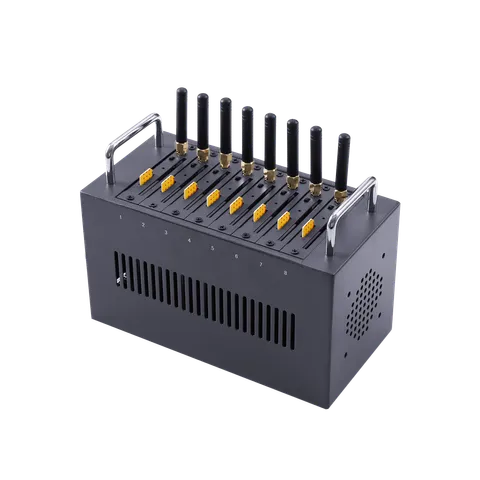
| 3 — Hardware | Telarvo TYH 8-port SMS modem | $113.00 | telarvostore.com · 2026-10-14 |
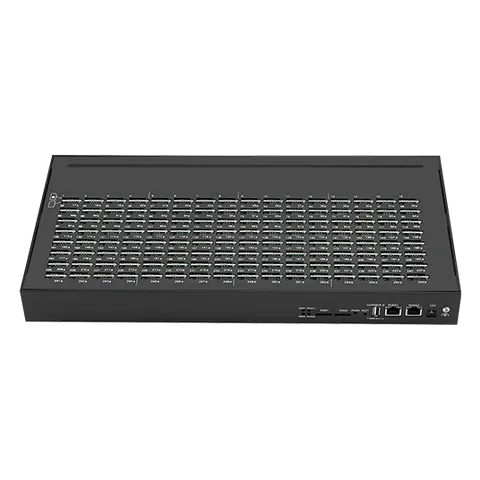
| 3 — Hardware | Telarvo SK-SMS Gateway 16–64 port | $800.00 | telarvostore.com · 2026-10-14 |
| 3 — Hardware | Telarvo SK-SMS Gateway 64–512 port | $2,480.00 | telarvostore.com · 2026-10-14 |
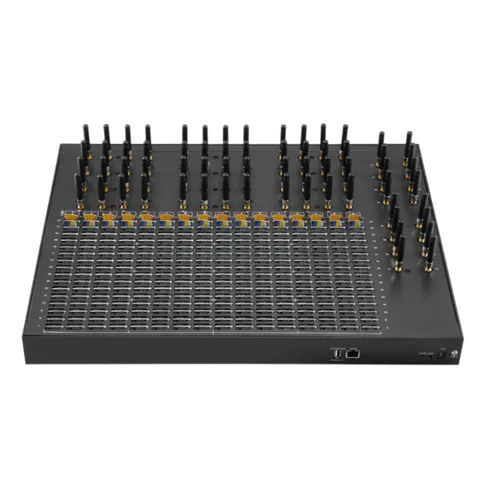
| 3 — Hardware | Telarvo SK SIMPOOL 256 | $3,000.00 | telarvostore.com · 2026-10-14 |
| 3 — Hardware | Telarvo SMS traffic rate per message | Not publicly disclosed, quote required | telarvostore.com No per-message rate card · 2026-10-14 |
Comparison basis: US domestic A2P 10DLC long code, registered campaign, per outbound single-segment SMS, excluding 10DLC registration, excluding carrier pass-through unless stated, excluding applicable taxes. Hardware prices are one-time capex, not per-message.
Carrier pass-through rates changed at least four times during 2026; re-verify before budgeting.
Blended cost per send is total monthly SMS spend divided by delivered messages, and is the only cost figure that survives an invoice audit.
Where SIM-based sending actually changes the math
A SIM path removes the platform markup layer and, on some routes, part of the carrier pass-through layer. That is the entire mechanism. It is why a SIM modem pool versus Twilio comparison only becomes interesting once volume is large enough to amortize the fixed pieces, and why the comparison collapses entirely when the traffic rate is unknown.
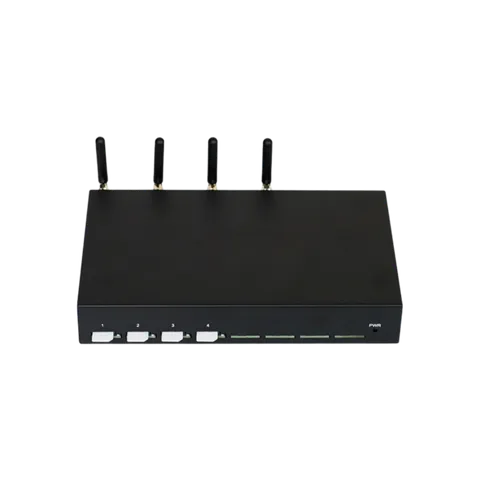
A SIM modem pool is a bank of physical modems, each holding a carrier SIM, that originates SMS over cellular radio instead of an aggregator API.
The break-even, with the unknown left visible
We modeled 100,000 delivered messages a month over a 36-month amortization. Two of the four inputs below are published. Two are not, so we labeled them.
| Line item | Cloud API path | SIM hardware path |
|---|---|---|
| Per-message rate | $0.0083 base + $0.0035–$0.0045 carrier | Not published — request a quote |
| Hardware amortization | $0.00 | $800 ÷ (36 × 100,000) = $0.00022 |
| IT setup (16 h × $80, our assumption) | $0.00 | $1,280 ÷ 3,600,000 = $0.00036 |
| SIM plans (32 SIMs × $10/mo, our assumption) | $0.00 | $320 ÷ 100,000 = $0.00320 |
| Fixed overhead | $0.00 | $0.00378 per message |
| All-in before traffic rate | $0.0118–$0.0128 | Quoted traffic rate + $0.00378 |
Assumption flag: the IT hours and SIM plan prices are ours, not vendor figures. Substitute your own labor rate and your carrier’s M2M SIM quote. The carrier range $0.0035–$0.0045 reflects AT&T at $0.0035 versus T-Mobile, Verizon, and US Cellular at $0.0045.
Read the last row and the decision reduces to one question.
At 100,000 messages a month, hardware wins only if the quoted traffic rate lands below $0.0080 to $0.0090 per message. Get that number in writing before you model anything else. We do not publish a percentage saving because the percentage depends entirely on a rate nobody posts — any figure you see quoted without a traffic rate attached is marketing.
When hardware is dead weight
Three conditions kill the case.
Spiky volume. Hardware bought for a Black Friday peak idles eleven months a year, and the amortization math assumes steady throughput.
No owner for SIM rotation. Carriers suspend SIMs carrying machine-originated traffic, and a pool nobody watches degrades silently until delivery falls.
A data-center send node with redundant fiber. You will never trigger the redundancy you paid for.
Is SIM-based SMS legal in the US?
Yes, and the transport does not change the duty. Prior express written consent, working STOP/HELP handling, 10DLC brand and campaign registration, and recipient-local-time quiet hours apply equally whether the message left an API or a modem. TCPA statutory damages run $500 to $1,500 per violating message under 47 CFR 64.1200 (verified 2026-10-14). Buying hardware is not a compliance shortcut, and no vendor who suggests otherwise should be near your program.
How to verify before you commit: a 30-day test
- Request the vendor’s US SKU band sheet in writing — see Outline 02.
- Get the traffic rate per message in writing, with the destination-country basis stated.
- Run 5,000 messages through both paths in parallel for 30 days.
- Compare blended cost per delivered message, not per submitted message.
- Log every SIM suspension event — this is your real ops cost.
FAQ
How much does bulk SMS cost per message in the US in 2026? $0.0118 to $0.0128 for a single-segment message on a major cloud platform: $0.0083 base plus $0.0035 carrier pass-through on AT&T or $0.0045 on T-Mobile, Verizon, and US Cellular. Registration fees bill separately.
At what monthly volume does SMS hardware pay for itself? We found no published study establishing this. Our working thresholds are 25,000 messages a month for staying on API and 100,000 for considering hardware, and both assume you count IT setup hours and SIM plans.
Do I still need 10DLC registration if I send from SIM hardware? Yes. Carriers closed unregistered 10DLC routing on February 3, 2025. Registration attaches to the number and campaign, not the transport.
Is SIM-based SMS legal in the US? Yes when consent, opt-out, registration, and quiet-hour obligations are met. The sending mechanism does not alter TCPA duties.
What is the biggest hidden cost in SIM-based sending? SIM lifecycle management — activation, rotation, suspension handling — plus IT setup labor. Both are usually missing from vendor ROI sheets.
Sources
- Twilio US SMS pricing — verified 2026-10-14 Verification caveat: Twilio’s pricing page is dynamically rendered, so the return price table cannot be directly scraped. The $0.0083 rate and GSM-7/UCS-2 segmentation values in this article are sourced from third-party audit records (zavu.dev checked on 2026-08-08; getomni channel.com checked on 2026-09-07), and were not obtained via live scraping. Please refer to the official pricing page for current rates prior to launch.
- FreeClimb carrier SMS/MMS fees — page updated 2026-09-03
- Bandwidth 10DLC registration fees — verified 2026-10-14
- 47 CFR 64.1200 (TCPA rules) — verified 2026-10-14
- Telarvo Store — hardware SKUs and prices · About Telarvo — verified 2026-10-14
Blog
Learn more
When a 4G LTE Failover Uplink Actually Pays for Itself in SMS
Cellular failover is worth buying when the send node sits outside a data center. Failure modes, config reference, SIM ordering, and when hardware is dead weight.
The 2026 SMS Compliance Checklist for US Marketing Managers
Federal floor plus state-level items to confirm with counsel: TCPA consent, 10DLC, RND scrubbing, recipient-local quiet hours. With sources and verified dates.
US LTE & 5G NR Bands for Bulk SMS Hardware: Why a "B1/B3" Spec Sheet Is a Red Flag
Only LTE-FDD B2 of the common B1/B2/B3 trio is in live US carrier use. US band matrix for SMS gateways, with 3GPP and carrier sources.